

When 'Forgive & Forget' Does Not Apply
Sometimes I think many of us missed the day in class where they taught us how to set healthy, appropriate boundaries with the people in our lives. Or the day they told us it was even okay to do so. The good news is, it's never too late to define, for yourself, the things you will or will not tolerate in relationship with others. So figure out what you need, what you will no longer accept, and lay it all on the table.

Somewhere along the way popular culture adopted the mantra "Forgive and Forget." I see it all the time in the bad TV I watch after a long day at work (see: self-care). There's a conflict, terrible things are said, there's yelling/screaming/fighting, feelings are hurt, and everyone goes home. The next day/week/month the two parties come together hoping for resolution and reciting one of the following mantras:
1. We have to forgive and forget.
2. We need to move forward/ move on.
3. The past is the past.
Okay, that's all well and good -- but what if this apology is part of a much larger relational pattern? Namely: Cause harm, apologize, ask forgiveness, repeat. This simplified version of conflict resolution -- that we must forgive and forget-- has the potential to trap us in unhealthy, toxic relationships far beyond their expiration date. It forgoes a deeper exploration of the issue in favor of a speedy, surface level resolution. By 'moving forward' and 'leaving the past in the past' we stay stuck. Instead of looking inward and assessing whether the relationship in question still meets our needs, or taking time to examine the ways our own behavior contributes to the dysfunction -- we avoid introspection and grind on.
I would offer that it is not forgive and forget -- it's dig in. It's look inward. It's examine toxic relational patterns. For anyone who finds themselves in a high conflict friendship or romantic relationship, a more appropriate approach might look something like this:
Look Inward; Set boundaries; Reassess the relationship
Look Inward: Check in with yourself and ask the tough questions. Is this relationship meeting your needs? If not, what's missing? What change do you wish to see? How can you move toward that change? What's stopping you?
Set Boundaries: Sometimes I think many of us missed the day in class where they taught us how to set healthy, appropriate boundaries with the people in our lives. Or the day they told us it was even okay to do so. The good news is, it's never too late to define, for yourself, the things you will or will not tolerate in relationship with others. So figure out what you need, what you will no longer accept, and lay it all on the table.
Reassess the Relationship: If, after expressing your needs and setting boundaries the other party cannot abide by this 'new world order' it might be time to reassess the relationship altogether. Are they willing to respect your needs and request for boundaries? If the answer is no it may be time to consider parting ways. Everyone deserves respect and if a relationship is no longer serving you it's okay to let go.
Let's all take better care of ourselves by loosening the grip of this 'forgive and forget' mindset because sometimes it just doesn't cut it.
When is it something more?
If you are worried about your personal safety, physical or emotional, then this might not be something you can negotiate on your own. There are many agencies and mental health professionals who specialize in helping victims of domestic violence and the impact of emotional and/or physical abuse. If you are wondering whether you may fall into this category, this is excellent resource for better understanding what constitutes domestic violence, abuse, and when/how to seek help:
Are you in an Abusive Relationship?
If this is an emergency and you need someone to talk to now please contact:
National Domestic Violence Hotline, www.thehotline.org, 1-800-799-SAFE (7233)
Warmly,
Kaitlyn Overman
MAEd, LMHCA, NCC

More From Kaitlyn Overman
Kaitlyn Overman is a Mental Health Therapist in Seattle, WA specializing in work with adolescents and young adults dealing with issues related to grief and loss, social anxiety, life transitions, identity development, depression, anxiety, and the impacts of trauma and abuse.

Cranberry Bliss Balls
Over the past few years these date balls / bliss ball / energy balls really have become quite mainstream. There are even some companies who sell them in pretty little cellophane packets for a few bucks a pop, however, they are much more cost effective to make at home. You'll also be creating a lot less waste with these than the individually packed variety. Just sayin'.
You guys! I've got a fresh recipe brought to you by my friend Mel of The Nomadic Wife! This inspiring lady is all about eating great food, slowing down, and making small shifts in your life that lead to big change. She's also all about delicious treats that are healthy and easy. What a gal. Enjoy these Cranberry Bliss Balls!
OH, THE GLORY DAYS OF ONE-HANDED SNACKS. WHO DOESN'T LOVE THEM?
If you don't love them my dear, well I am sorry to announce we can no longer be friends.
I'm just kidding! Sort of. Haha.
Over the past few years these date balls / bliss ball / energy balls really have become quite mainstream. There are even some companies who sell them in pretty little cellophane packets for a few bucks a pop, however, they are much more cost effective to make at home. You'll also be creating a lot less waste with these than the individually packed variety. Just sayin'.
Sure these little balls can take a bit of time to roll up but you can put whatever you want in them, so there's that. I pack them into airtight containers in the fridge, with wax paper in between (which you can reuse for the next batch). I grab one or two when I'm starting to feel my energy dwindle and I'm on my merry way before you can say energy ball.
In case you were still on the fence, and I didn't have you at "these are sweet but you can totally still have them", well let me tell you a little secret. Before I knew about these rolled up bits of goodness, I used to make this recipe, I just didn't roll it up. I would make the mix, squish it into the bottom of a square container & score squares into it with a knife. Then I would pop it in the fridge and pull out a square whenever I was craving a little something sweet (hello there, mid-morning coffee!).
So now that you know you that you don't even have to roll them up & you can totally have these to nourish you without any hassle.. I'm sure we can again be friends.
Get the recipe here over at The Nomadic Wife >>
Big love mama! You got this.
Mel

My Favorite Books on Nutrition
I’ve recently been getting a lot of people asking for my favorite books and resources on health and nutrition. I want to emphasize that they are thousands of books out there on health and nutrition, and they all have a different focus and take on what we should eat. It can be overwhelming when we read something one day that tells us all carbohydrates should be avoided and the next read a book about the critical importance of whole grains in the diet.
I’ve recently been getting a lot of people asking for my favorite books and resources on health and nutrition. I want to emphasize that they are thousands of books out there on health and nutrition, and they all have a different focus and take on what we should eat. It can be overwhelming when we read something one day that tells us all carbohydrates should be avoided and the next read a book about the critical importance of whole grains in the diet.
So, while I always encourage learning, reading and expanding your nutritional knowledge, let’s take it all with a grain of salt and remember that the most important thing is to tune into our own bodies and discover our own unique bioindividuality. Research, learn and take in information but remember that we must experiment on ourselves and ultimately do what feels right for our own bodies.
That being said, there are some amazing resources out there for those starting to get interested in nutrition and learning more about how what we put into our bodies affects us, and here are some of the books and practitioners that have influenced me the most:

The Immune System Recovery Plan by Susan Blum
This is a great overview for those suffering from autoimmune related conditions. It gives a nice overview of how diet can affect symptoms and lays out easy steps to follow.
The Autoimmune Wellness Handbook by Mickey Trescott and Angie Alt
When I first read this book I was nodding my head and saying "yes" out loud so much I knew it was going to be a winner. It's a beautiful summary of how to manage symptoms and live an active and productive life with autoimmune disease written by two ladies who have gone though it all themselves. I highly recommend this for anyone dealing with an autoimmune issue!
Digestive Wellness by Elizabeth Lipinski
Liz Lipinski is such a wealth of knowledge and writes about all facets of our digestive system (and really our bodies as a whole) in a way that’s easy to understand. This book is great for health coaches and anyone working with individuals with digestive issues.
Why Stomach Acid is Good For You by Jonathan Wright
This book blew my mind when I first read it because it goes against a lot of things we think we know about stomach acid, digestion and acid reflux. It’s really worth a read to understand how medications like proton pump inhibitors and antacids affect our digestion, and how we can get to the root of what’s really going on inside our guts.
Eat, Drink and Be Healthy by Walter C. Willett
This book has been around for a while and is a great introduction into the theory of eating a whole foods, low carbohydrate diet. Walter Willett also delves into the politics of our food system, and how government influences our food supply. A super interesting read and a good first book to get into!
The Abascal Way: To Quiet Inflammation for Health and Weight Loss by Kathy Abascal
This was the book that first got me into the world of holistic nutrition and food as medicine and it has a special place in my heart! Kathy Abascal lives in Vashon Island, WA and created a healing diet that spread around the Pacific Northwest. She writes a lovely summary of how food affects our bodies and can cause inflammation in the body. She presents her “to quiet inflammation” diet and gives recipes and tips and tricks to reduce inflammation and start feeling great.
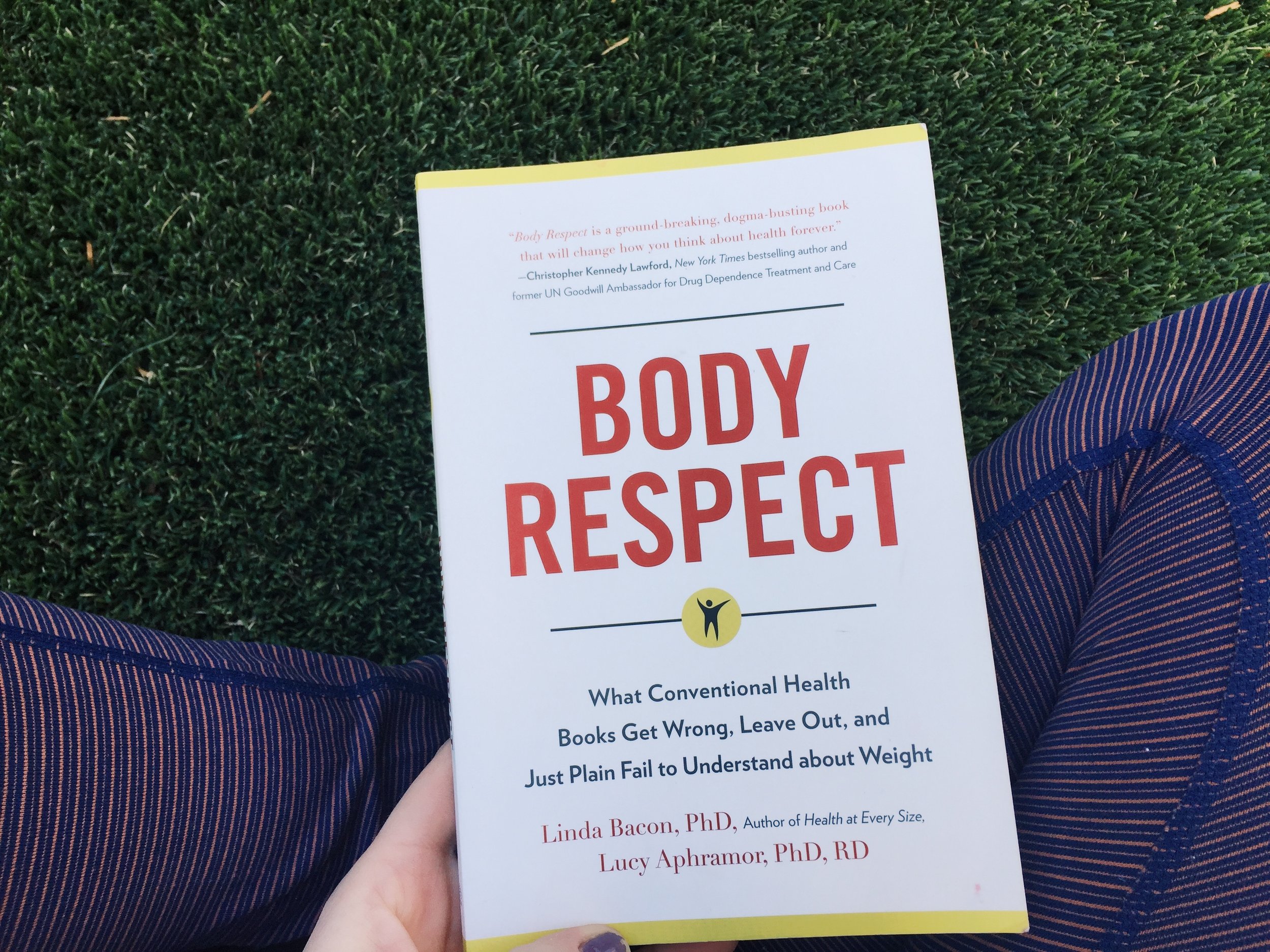
Body Respect by Linda Bacon and Lucy Aphramor
This book blows notions we have about weight and dieting out of the water. It tell us what conventional health books get wrong, leave out and just plain fail to understand about weight.
Mind Over Medicine by Lissa Rankin
While this book does not speak directly to nutrition, it is really important in addressing holistic health and the way chronic stress manifests in our bodies as illness and disease. As a medical practitioner who got burnt out herself, Dr. Rankin speaks to our conventional medical system, the way we currently treat disease, and alternative factors we should consider to achieve optimal health
Healing with Whole Foods by Paul Pitchford
This is a big book, don’t be intimidated! I use it more of a reference guide to understand how particular foods act in the body and how we can use food as medicine. This one is probably better for practitioners or people getting into Chinese Medicine and the more specific uses of food as medicine
Total Renewal by Dr. Frank Lipman
I love any book by Dr. Frank Lipman because I align so much with his overall approach to health and wellness. In this book he covers diet, lifestyle and exercise and lays out a plan for an elimination diet to get you started on the process of healing your gut and transitioning to a whole foods diet.
That should be good a good list to get you started. Let me know if you read (or have read) any of these and want to continue the discussion. Happy reading guys! If you want more information to answer the perpetual question "what should I eat today?" read my blog post here for a simple answer >>
Want some more fresh food inspiration? Click the button below to get my free 5-Day Clean Eating Meal Plan inspired by the theories behind many of these great reads.
You'll get recipes, a shopping list and daily instructions for what to make. TOO EASY! I really hope you enjoy xx
With Love,
Christina Tidwell, MN, RN, CHC

Being Your Own Health Advocate
Have you ever gone to a doctor’s appointment with questions, concerns, and data you’ve gathered and left without being able to get a word in before the doctor had to whizz off to her next patient? Or have you voiced concerns about your current treatment plan and asked for alternative options only to be met with a statement such as “this is how things are done.” Or maybe you feel like you don’t even know what questions you would ask your health care providers if given the chance.
Have you ever gone to a doctor’s appointment with questions, concerns, and data you’ve gathered and left without being able to get a word in before the doctor had to whizz off to her next patient? Or have you voiced concerns about your current treatment plan and asked for alternative options only to be met with a statement such as “this is how things are done.” Or maybe you feel like you don’t even know what questions you would ask your health care providers if given the chance.
As patients, we put trust in our health care providers and believe that they hold the answers to all of our problems, the antidotes to our ailments. In the model of health care practiced today we expect to go to our doctors with problems and leave with a magic pill to cure us. Sounds like an easy fix right? In some cases this model definitely works. But as humans we are complex beings and rarely does a quick fix pill actually work to resolve our underlying issues especially in relation to chronic disease.
We are all so unique and our health is impacted by many factors such as our genetics, personal history, diet and lifestyle, stress levels, and overall satisfaction with life. No doctor is going to have the vast amount of knowledge that we have of our own bodies. You are the only one that possesses that wealth. This is why it’s so vitally important that we learn to work in conjunction with our health care providers and add our own expertise to theirs.
For example, say there are two people with a diagnosis of irritable bowel syndrome (IBS). One might be caused by an underlying bacterial overgrowth from antibiotic overuse while the other is caused by stress from an abusive relationship. Their treatment courses for IBS will be completely different and they will not benefit from a one-size-fits-all treatment without consideration of their unique personal experiences. These patients need to work in conjunction with health care providers to create effective treatment plans and require ongoing support to find ways to get back to health. We must become our own advocates and enter into a relationship with our health care providers where we are playing as part of the team rather than standing on the sidelines.
As Andrea Nakayama, Functional Nutritionist says,
“No more patients, sitting in the mystery of their health, feeling like their own bodies have become impossible riddles to solve”
Sometimes in the midst of dealing with illness or pain we feel like our health is one big mystery and we act as if what’s going on in our bodies is none of our business. But it’s the only body you’ve got and you better believe it’s your business! I want you to feel empowered to learn about your illness or imbalance, to ask informed questions, to work with your providers to find alternatives, and to ensure that your voice is heard. You can do this by:
Researching your illness to get informed
Writing down questions you want to get answered as they come up
Beginning the process of tuning into your body (through meditation, journaling, food diary analysis, mindful breathing) so you can accurately convey symptoms and feel more connected to what’s going on in your body
Assembling a care team that wants to work with you and foster your empowerment. Don’t be afraid to make changes if you don’t feel supported by your health care providers, it’s meant to be a two-way relationship.
You may have heard of people having health advocates that accompany them to doctor’s visits, or a family member who acts as an advocate. It’s always great to have another pair of ears during appointments to ensure that nothing is missed when going through the health care system and I highly recommend having your own form of advocate if you don’t yet feel comfortable on your own. Read more about what advocates can do for you here >>
Here is a link to the Washington State Health Advocacy Association for more information about what health advocates do and how to go about hiring one in Washington Sate.
So let’s do this you guys! It’s time to reclaim our health and enter into partnerships with our health care providers in order to obtain vibrant, beautiful health. If you want to learn more about how you can empower yourself this year to be your own advocate send me an email, I’d love to hear from you!
With Love,
Christina Tidwell, MN, RN, CHC